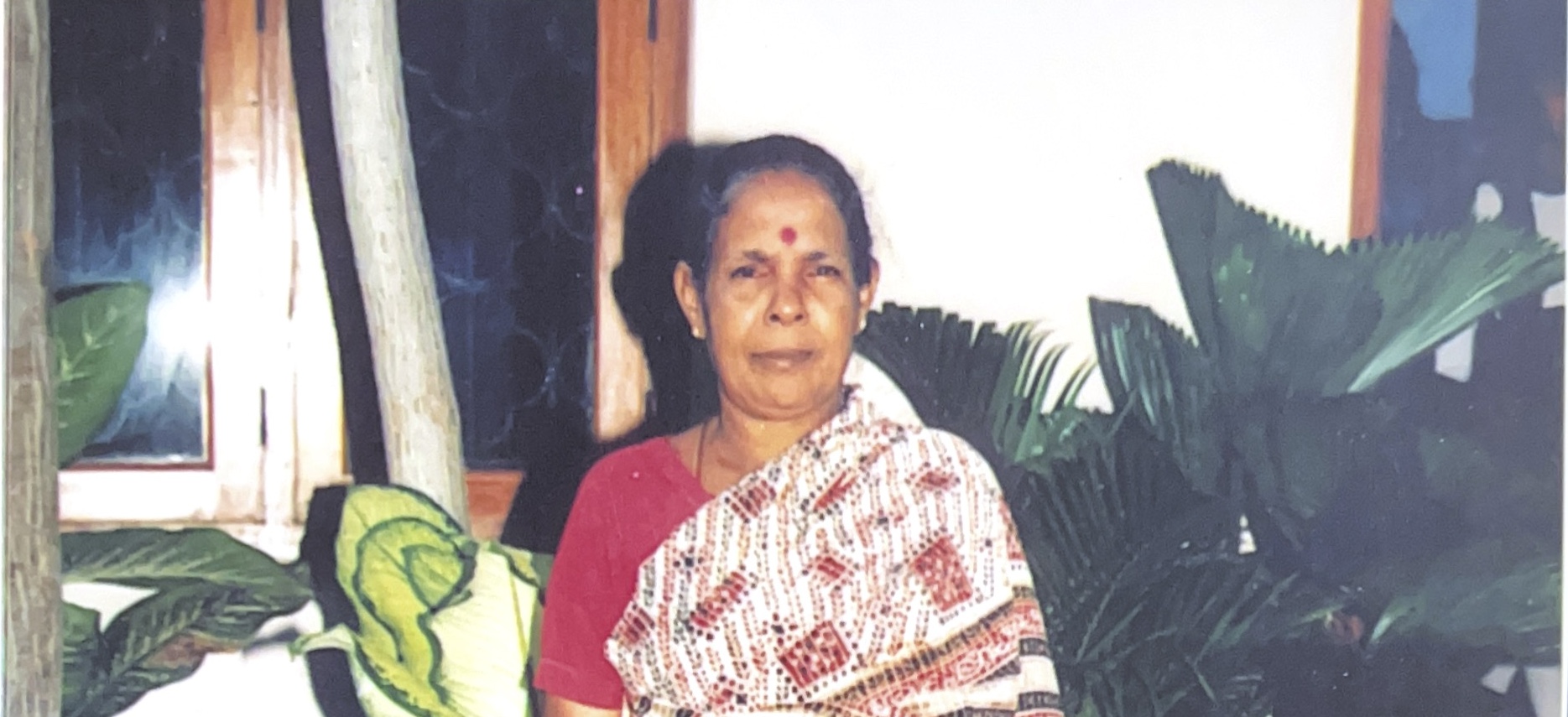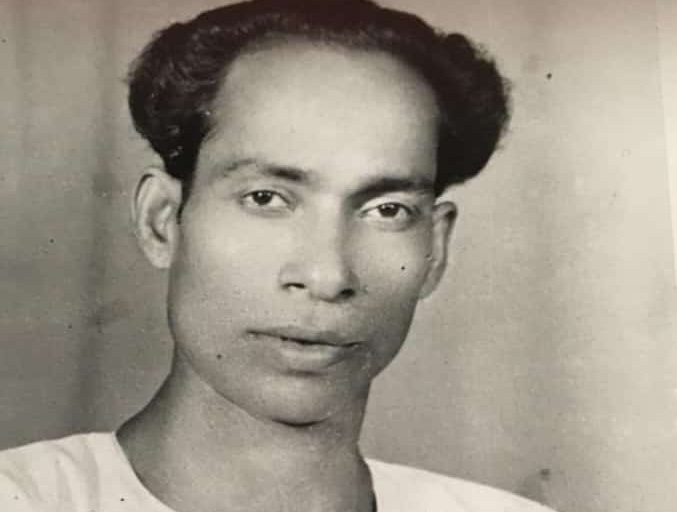
Memoir of Our Father, Chankannai Chandiyan Selvam
In the historic village of Chankannai, situated in the Jaffna District, famed for its ancient city of Yalpanam (Jaffna) in the precious island of Eelam (Ceylon), was born Aiyathurai, the youngest son of Thambu and his wife Chellatchi, on November 3, 1913.
This beloved youngest son, Aiyathurai, became known by another name, Chankannai Chandiyan Selvam, a name that remained with him until his final breath.
In his youth, he excelled in many forms of traditional martial arts, Silambam, Kalari, and Swordsmanship, becoming a renowned and fearless warrior. He was living proof of the saying, “Knowledge invites envy from the unwise.” During those turbulent times, when a police officer came to arrest him, Selvam struck back with his sword, an act that led to seven long years of imprisonment, marked by hardship and pain.
During his prison years, he learned to speak Sinhala fluently and also mastered small crafts such as rope weaving and drum making. He was assigned the solemn duty of cleaning and inspecting the scaffolds, ensuring the mechanism worked before executions. Later in life, he would often recount, with great sorrow, the cries of those prisoners led to their final moments.
After his release, Selvam returned home and set up a tea shop in the Chankannai Market, which became his livelihood.
Out of boundless love for his mother, he chose never to marry, instead dedicating himself to her care, treating her as divine. When Mother Chellatchi passed away, Selvam was thirty-six years old. In her memory, he carefully preserved her clothes, sari, a little of her ashes, and even her teeth in a small box, cherishing them daily as sacred relics until the end of his life.
At the age of thirty-seven, Selvam finally entered married life. He wed Parameswari, the eighteen-year-old daughter of Ponniah and his wife Sothipillai from Kondavil, a village famous in Jaffna for its tobacco leaves. This union transformed Selvam into a man of family and social responsibility.
When Parameswari’s father, Ponniah, visited Chankannai to meet the groom and learn more about him, he found nothing to criticise. Instead, he declared with certainty that such a man was indeed the right husband for his daughter.
Yet Selvam’s path was one that society might not have easily accepted, not then, nor now. In stark contrast to poet Bharathi’s dream of a world without caste, Selvam fought fiercely to preserve his caste identity, even at the cost of his property. To the humanists of his time, this stance invited criticism, but within the feudal system of those days, perhaps it was unavoidable.
Despite living as a solitary fighter, the name Selvam’s Tea Shop echoed all the way to the Sri Lankan Parliament. His story was even recorded in parliamentary documents by the then Member of Parliament Appapillai Amirthalingam, referring to “Tea in a clay pot sold for 20 cents.”
The bullets that once came for him trembled before his courage. He was a seer, a man who could foresee his own fate.
Public service became his lifelong calling. Though he never studied law formally, even lawyers sought his wisdom on legal nuances.
At one point, when he was denied the right to break a coconut at his daughter-in-law’s wedding, he walked out of the ceremony, and for twelve years, he distanced himself not only from that family but also from his own sister’s household, living in solitude.
The bullet holes on his shop doors stood as silent witnesses to his fearless life. Those doors were never replaced, remaining until the day he died.
Just as Karna, son of the Sun, was born with his divine armour and earrings but lost everything due to Krishna’s cunning, Selvam too lived his life with his weapons, sword, silambam staff, and gun, by his side until the very end.
He was a devotee of Lord Murugan and sought spiritual initiation. Every Friday before dawn, around 3 a.m., he would ride his bicycle to Nallur Temple to have darshan of Lord Murugan.
In devotion, he named all his sons with Murugan’s sacred names: Kugan, Kumaran, Sadacharam, Pavan, Paran, and Kulathilakkan. His daughters bore graceful names ending in “Rega”: Punitharega, Ravirega, and Janakarega, and his youngest daughter was named Meenalogini.
Until his final days, he remained steadfast in his faith, observing fasts every Friday, as well as on new moon and full moon days.
An old saying goes, “A man with five daughters becomes a king,” yet Selvam, father of ten children, became a saintly figure instead.
Just as Lord Murugan stands as a saint at Palani, Selvam too stood tall, proudly saying, “If Murugan is divine, what am I but his reflection.”
As the wheel of life turned, his children flourished, and fortune smiled upon his family. The goddess of destiny blessed them with three sons-in-law, three daughters-in-law, and eight grandchildren, gifts of nature itself.
But as joy filled the home, age and illness quietly took hold of this great soul named Selvam.
An ardent believer in astrology and a man of insight, he foretold his own passing.
True to his words, on Friday, June 7, 1991, at the age of seventy-eight, Selvam’s mortal body merged back into the elements of nature.
We, his descendants, continue our journey carrying his memories in our hearts, as living branches of his mighty tree. 
Note: These accounts are drawn from his own words and from the testimonies of those who knew and worked with him since 1963.
Written by: SakthiSadacharam Aiyadurai
Translated by: Jasivan Sivakumar